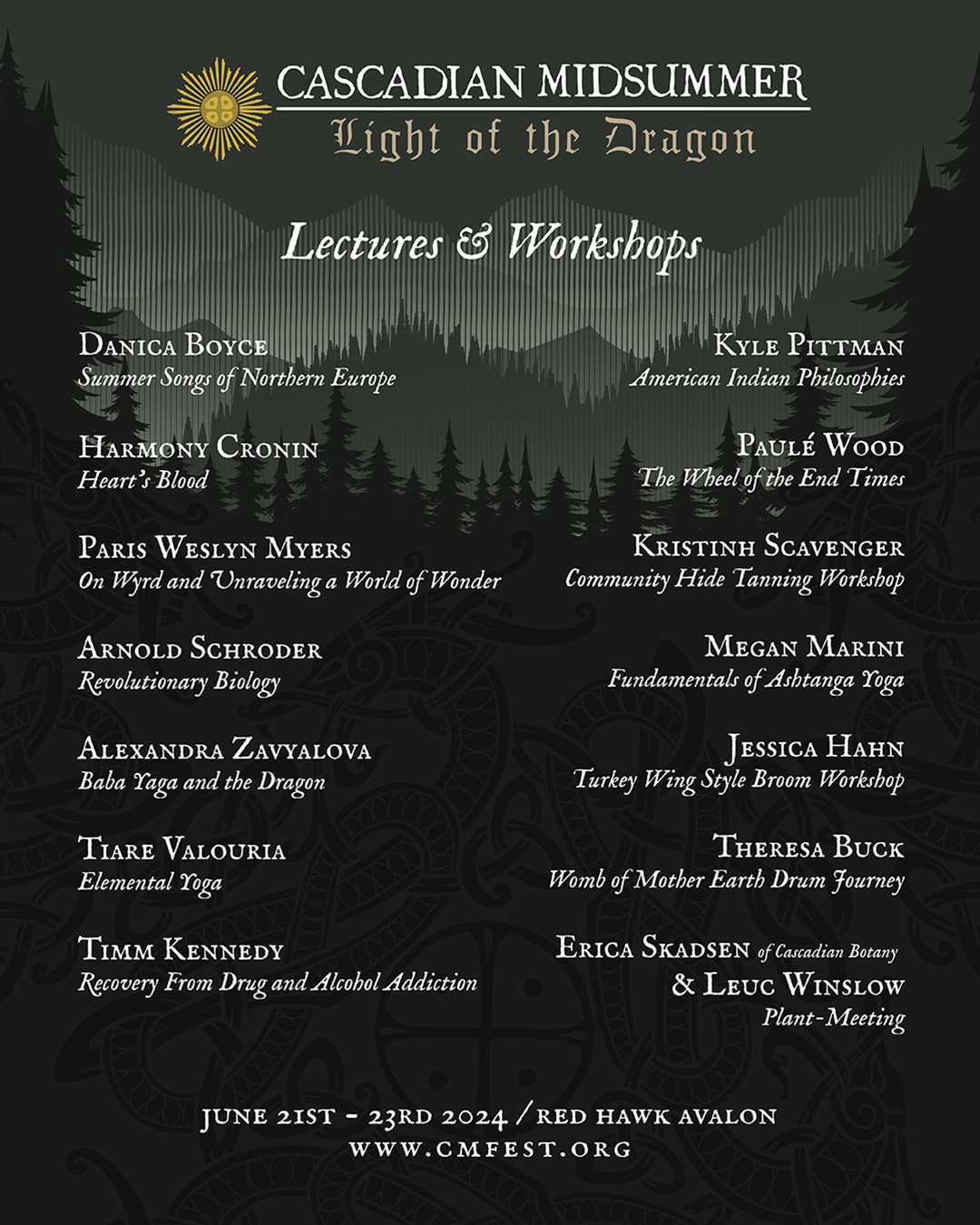
Cascadia Midsummer Lecture, June 2024: The Wheel of the End Times
Title:
The Wheel of the End Times: How navigating with the Wheel of the Year helps us find beginnings and ways forward
Lecture description:
The Wheel of the Year has been used by the Celts as early as the 8th century BCE to mark the changing seasons and cycles of nature, measuring the passing of time by reflecting the order of the cycles of the sun, moon, and stars. The Celts divided the year into two seasons, summer and winter, and marked the transition between these seasons with 8 sabbats: 4 quarter-point solar festivals (solstices and equinoxes) and 4 cross-quarter fire festivals (Imbolc, Beltane, Lughnasadh, and Samhain).
The Wheel of the Year marked traditional, place-based agricultural cycles. The framework of the Wheel can be used today for our personal metaphoric cycles of planting and harvesting, for times of soul renewal and soul death. It can be used at many scales; for example, the Wheel of the Day might be Imbolc/dawn, Beltane/noon, Lughnasadh/sunset, and Samhain/midnight.
The end of a festival like this one can feel like Samhain, or the Harvest of the Soul. How do we leave these nourishing communal spaces and return to our mundane lives? The Wheel tells us that after Samhain is the Dreamtime, or Winter. The fields lie fallow and it looks like nothing will grow again. But the Wheel turns through the darkness and back towards the light. The Dreamtime is the time for integration and dreaming of what to plant in the next cycle of growth.
In this time of ongoing climate collapse, increasing polarity, and the grind of neoliberalism and inequality, how can we use the Wheel to help us look forward and imagine new ways of being? There is a profound discrepancy between how we evolved to live in communal face-to-face societies and how we live today in disconnection and fragmented time. The Wheel can provide a way of reorienting to the disillusionment and dissatisfaction of modernity, a template for moving incrementally towards a better future.
I did this hour-long talk without a presentation, sitting on a chair on the main stage in the middle of the forest. It was quite an honor, I had a lot of imposter syndrome when I looked at the previous years’ speaker credentials! And it was great. :)
I didn’t leave much time for Q&A, but I was asked for other examples of the Wheel of Time in other contexts. In my talk, I said that I usually felt the “autumn equinox” towards the end of an event. Another example I gave was relationships. I said something like: “Y’all are breaking up and getting divorced because you think the relationship is over. It’s just the fallow time of winter, when things lie fallow.”
Later that evening as I walked to dinner, a person came up to me and said: “I missed your talk, and I was just walking through when I heard you say that thing about the Wheel of relationships. I think you just saved my marriage.”
WOW. I felt so honored, and this is why I love to give talks.
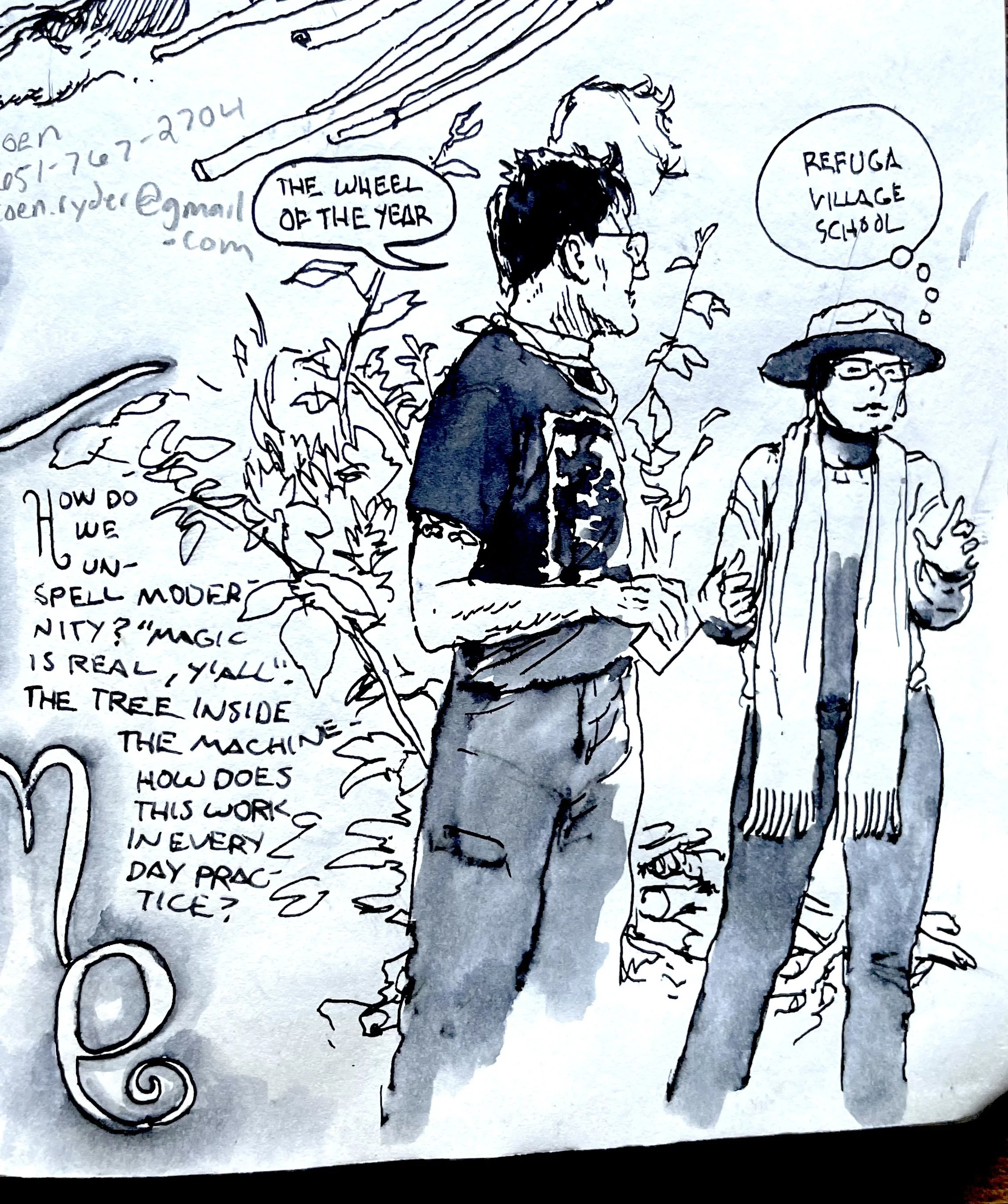
I also got to reprise this talk four days after Cascadia Midsummer, at Echoes In Time (June 2024). I did a short lecture and longer community conversation with rain crowe, one of my favorite teachers and witches. Illustration by Seamus Heffernan, who sketches all of his class notes like this in real time!
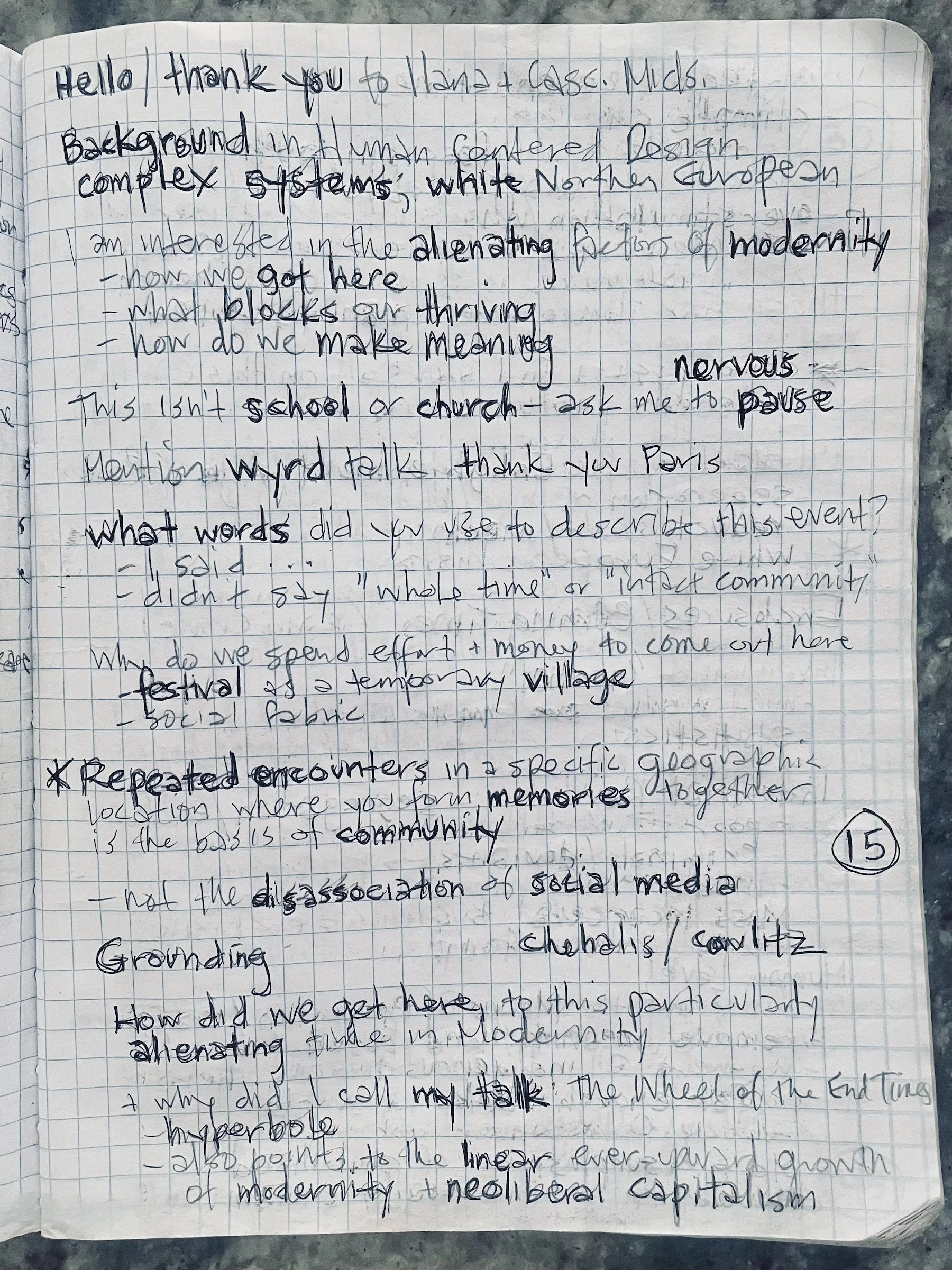
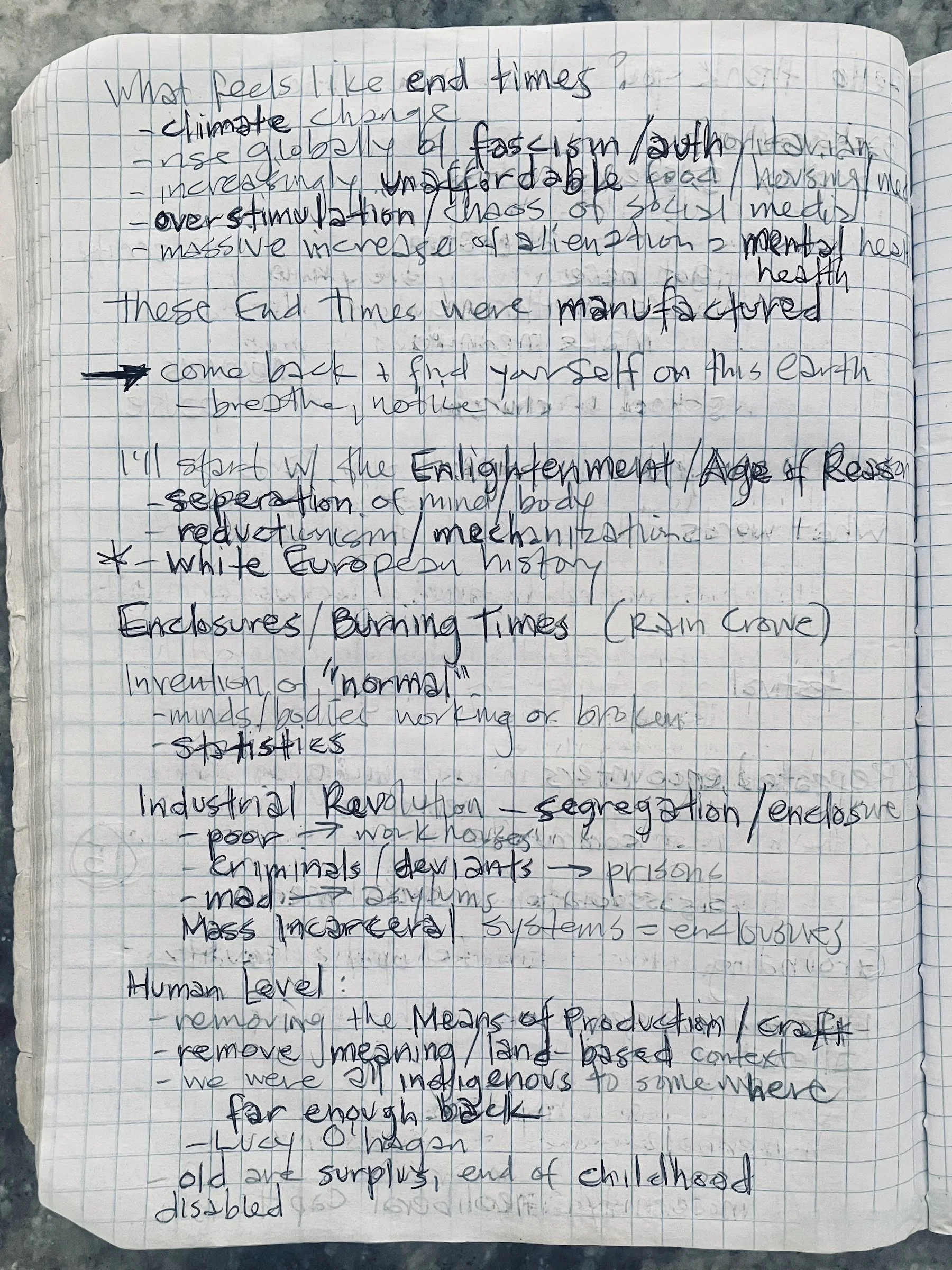
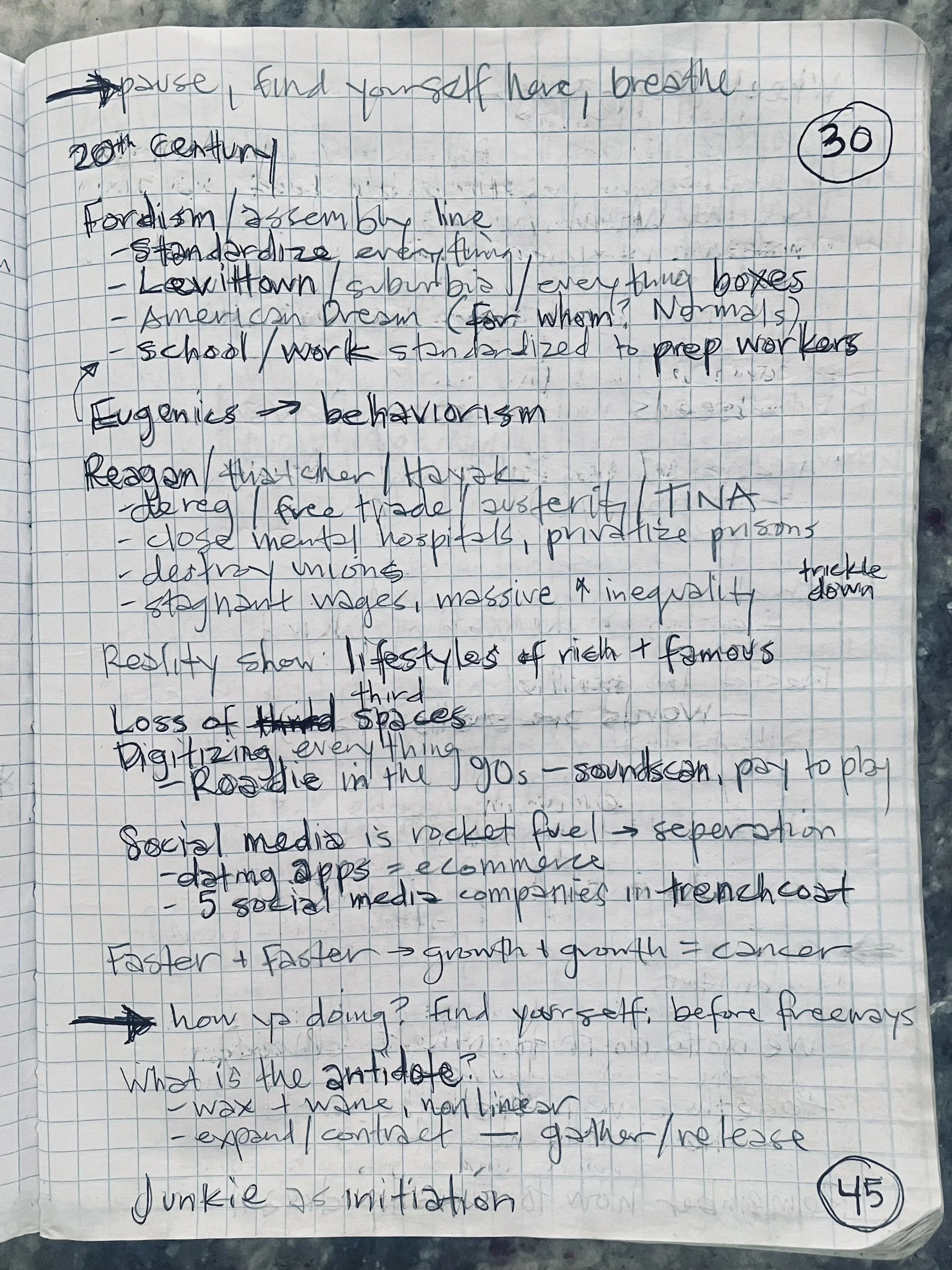
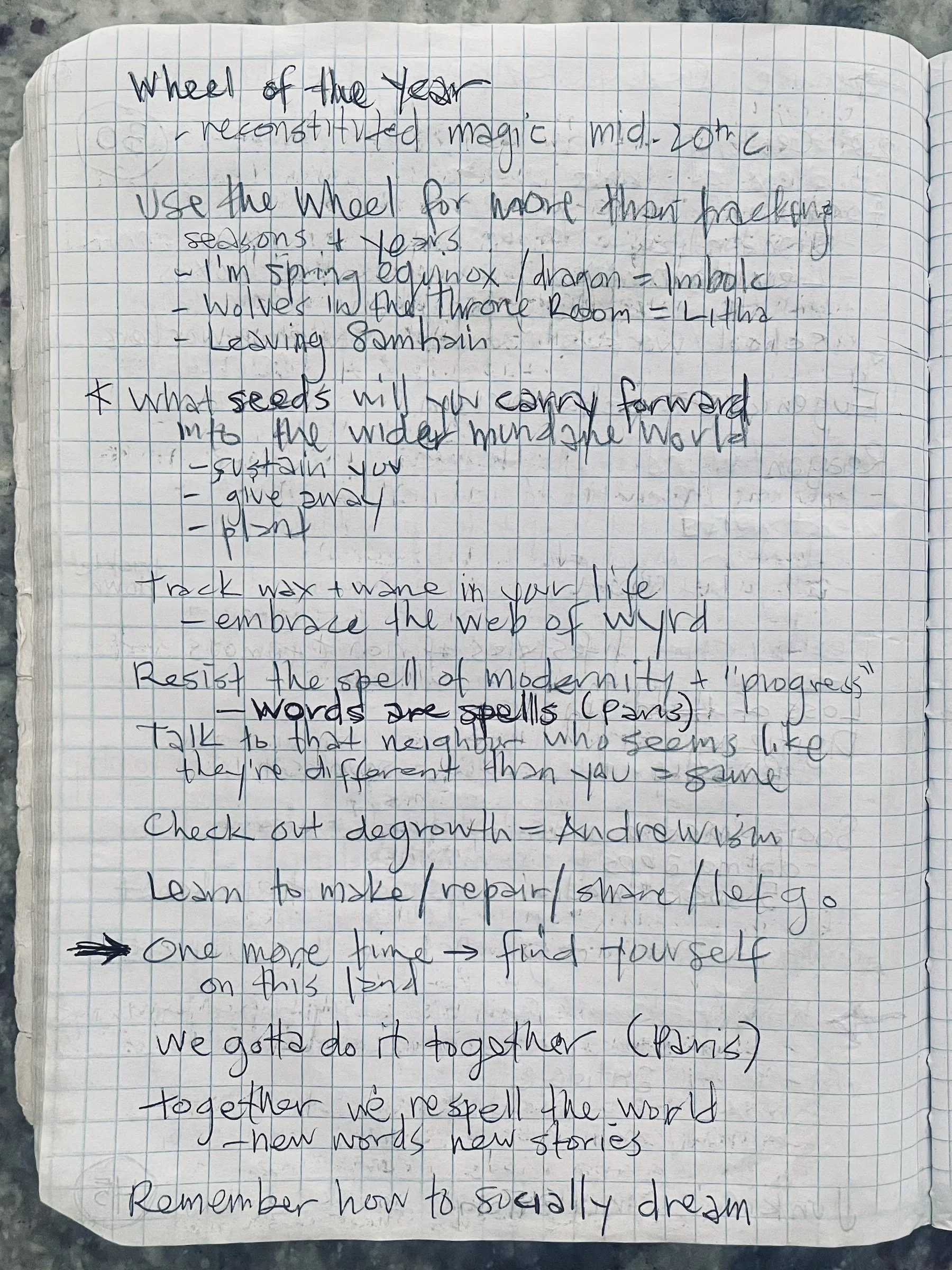
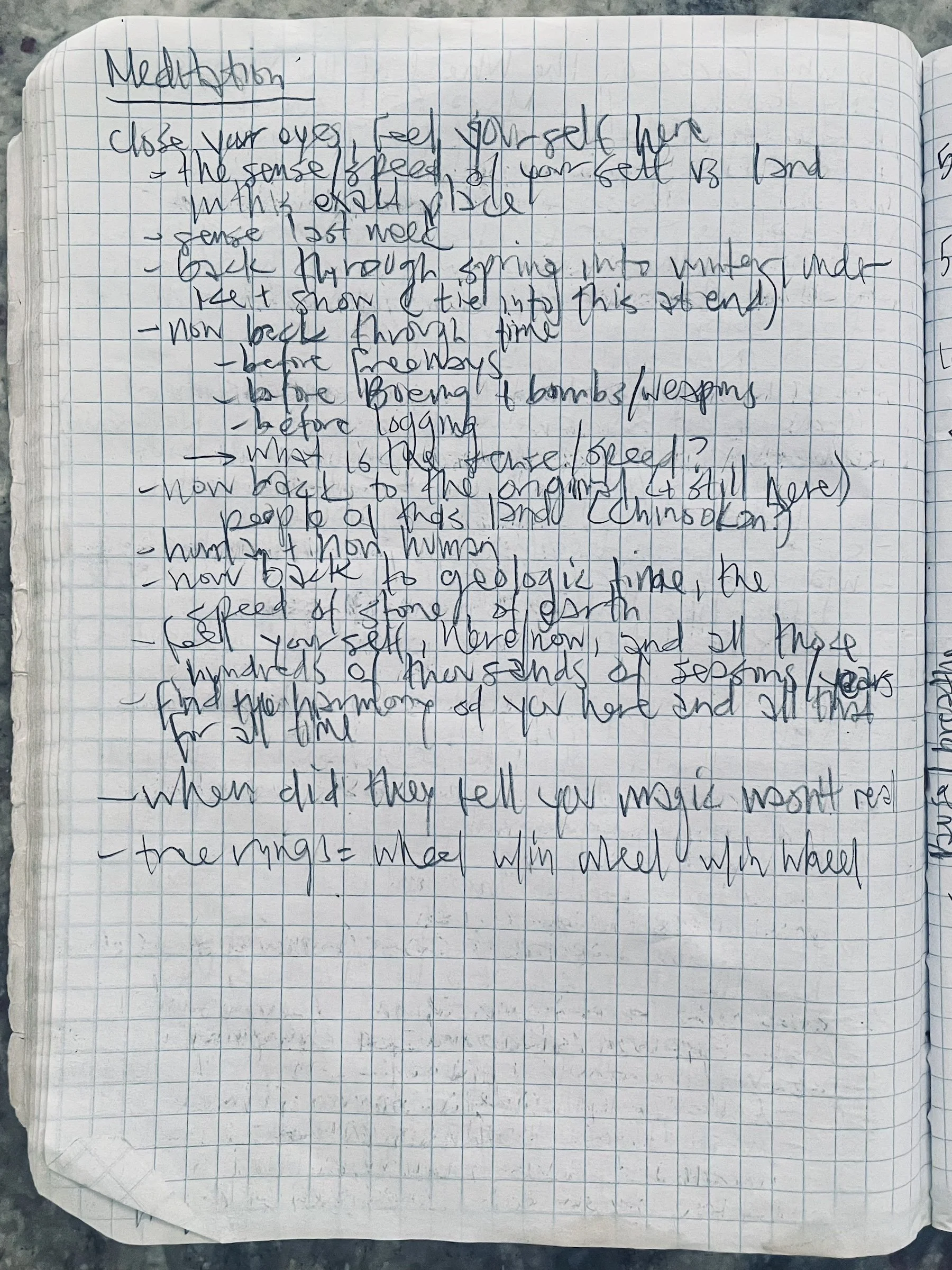
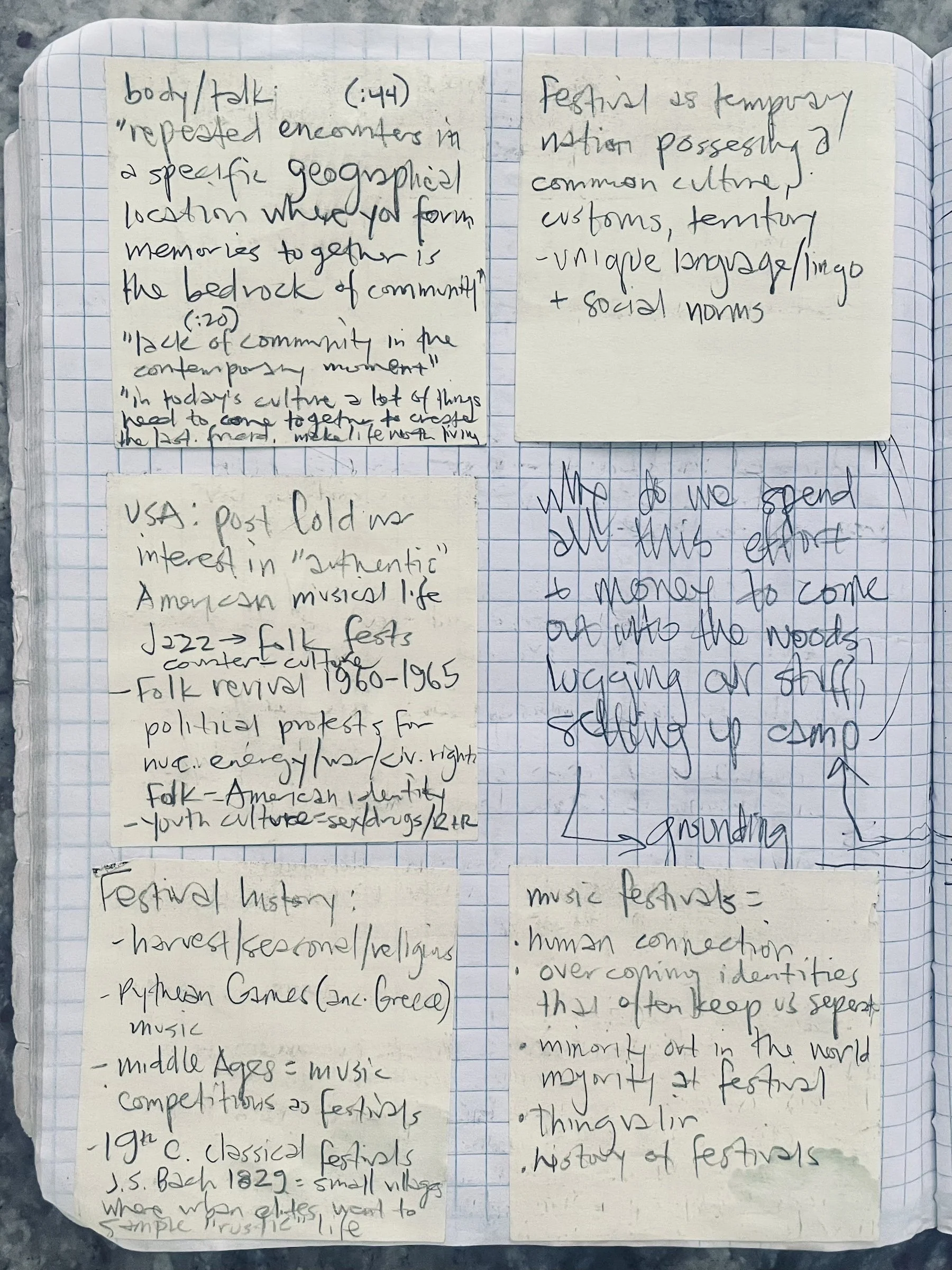
Here are the notes that I used to give my talk:
Bio:
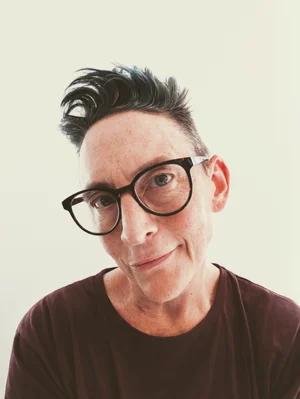
Paulé Wood (they/them) has a background in Human Centered Design and has been professionally designing complex systems for two decades. Storytelling is a powerful and ancient practice; they have coached and facilitated workshops to help people break out of fixed and outdated thinking using storytelling, from environmental economics to queer/trans community.
A practitioner of de-armouring and Northern European magic, they use the Wheel of the Year as a framework to navigate at many scales and have led closing rituals at events and festivals using the "Wheel of the Event" framework to help people orient to leaving sacred communal space and return to the mundane.
A maker and repairer of clothing, tools, and community and a lifelong learner, they enjoy reading, listening, and discussing topics about resistance, mutual aid, alternative governance structures, cultural anthropology, sociology, and the way things work. Paulé is on the board of Rewild Portland and gave a talk, Rewilding Loneliness, at the 7th Annual North American Rewilding Conference. They are the co-initiator of the community organization Rewild Salish Sea, part of the Rewild Alliance.