Paulé Wood | Human-Centered Experience Design
Work | About
CASE STUDY:
Amazon Last Mile:
Worldwide scope, hyperlocal delivery
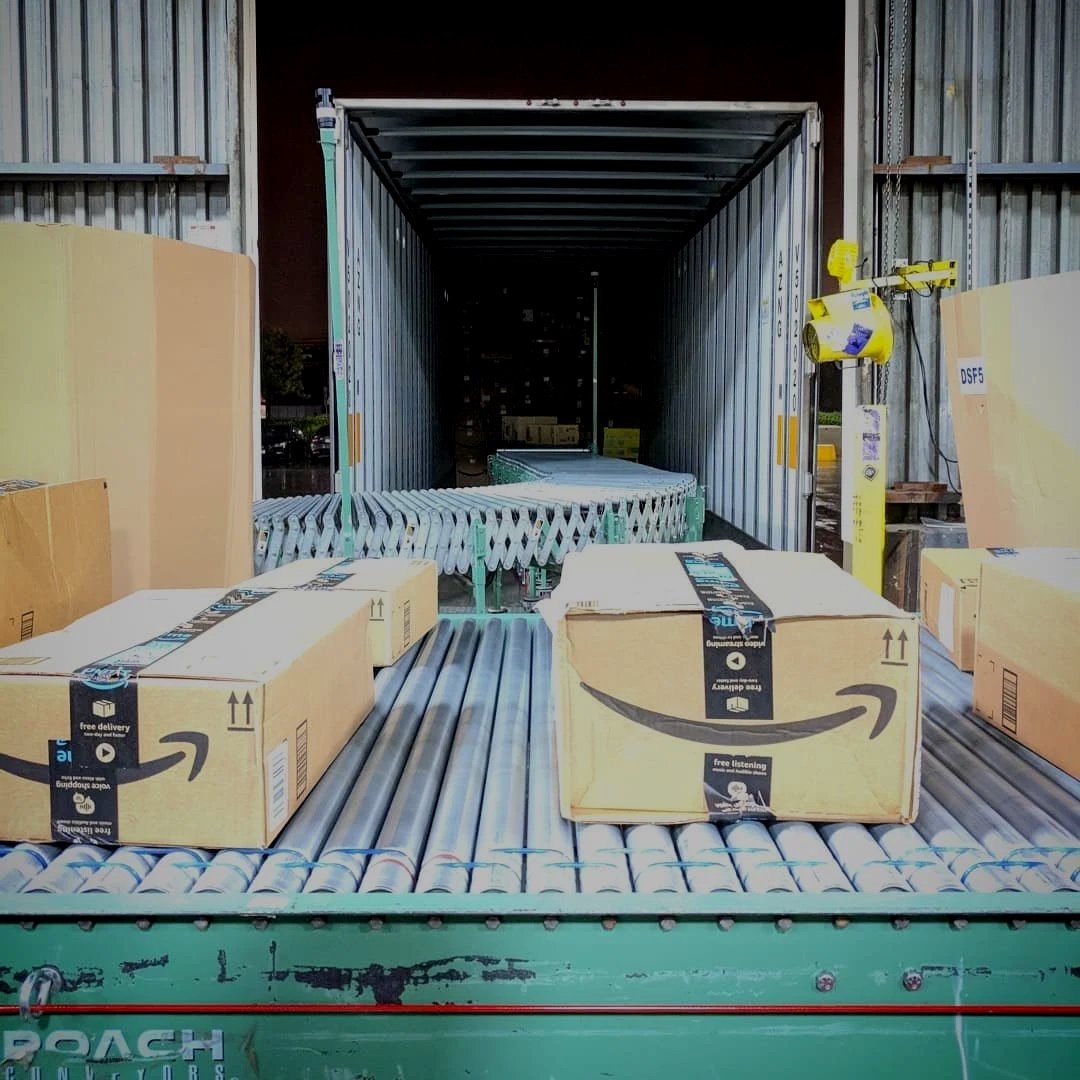
Thousands of crowdsourced drivers from all over the world, non-normalized addresses, and cultural and urban idiosyncrasies: I was brought on as a Senior User Experience Lead to help them expand last-mile delivery service into markets in USA, UK, Germany, and India.
I designed consistent, optimized experiences for Amazon Flex, Seller Flex, Ship-with-Amazon, Amazon Pay, and other programs. I had to quickly understand the delivery landscape and system breakdowns – both physical and digital – then worked across many teams in AMZL on improvements.
The problem
In 2017, the year I joined the Logistics (AMZL) org, Amazon shipped over 5 billion items worldwide. Delivery infrastructure wasn’t keeping up, and the newly launched Prime Now service was causing exponential challenges to on-time delivery. They were rapidly expanding into the UK, Germany, and India, each with their own idiosyncratic challenges. The Flex app, which Amazon requires all drivers to use to deliver packages, was built for a pilot and then pressed into service for use worldwide and wasn’t scaling well.
My first stop was India, where street addresses are ‘non-normalized” and Amazon Maps had only rudimentary data. Many times the numerical sequence of buildings and streets is based on when the area was built, not on ordinal, geographical space. Usually, the only way to find the exact location is by navigating to the neighborhood and then asking someone on the street about how to find the address.
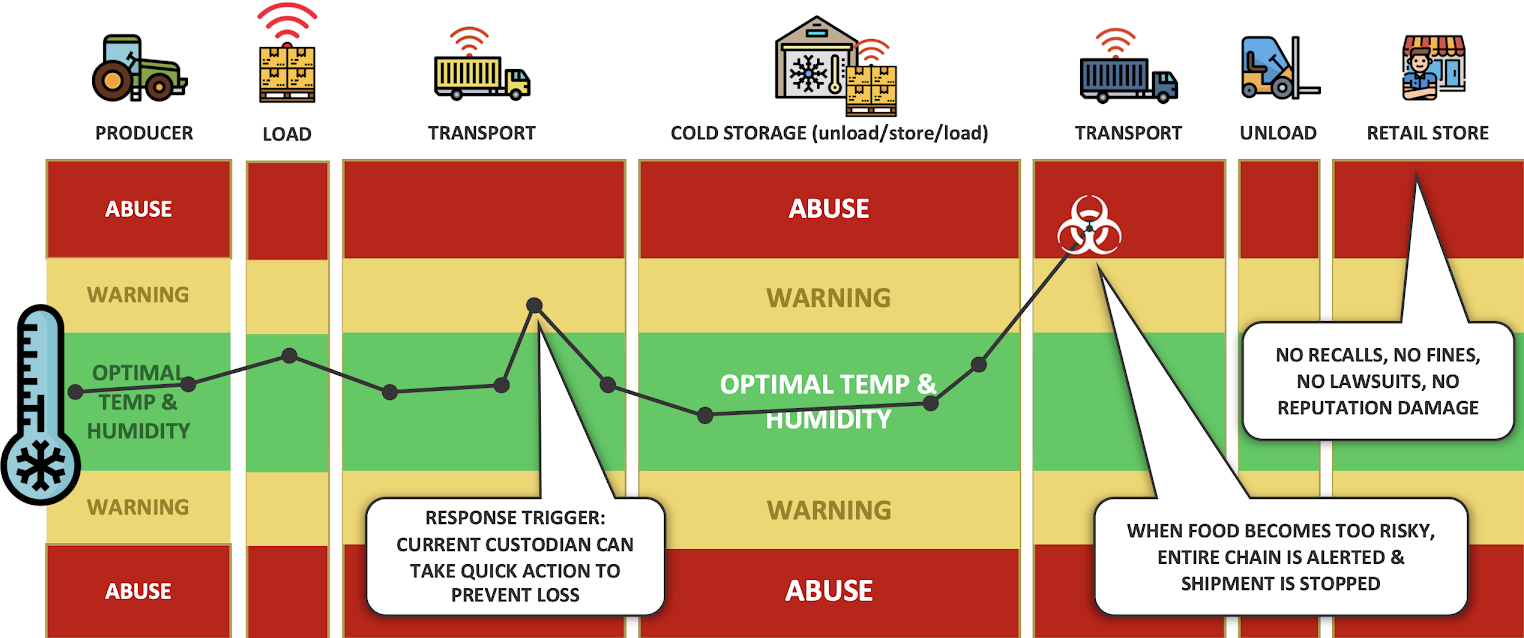
Transparent Path end-to-end collaboration to reduce risk and loss
The solution
We avoid “garbage in, garbage out” data with secure industrial IoT sensors that continuously monitor and report location, temperature, and humidity at the pallet or case level. With a cooperative supply chain and shared origin, provenance, and environmental data, partners can work in concert to reduce risk. With access to this rich logistics and conditions data, our platform will intelligently predict issues like sourcing gaps, stockouts, equipment failures, and reputational risks — far in advance of them actually occurring.
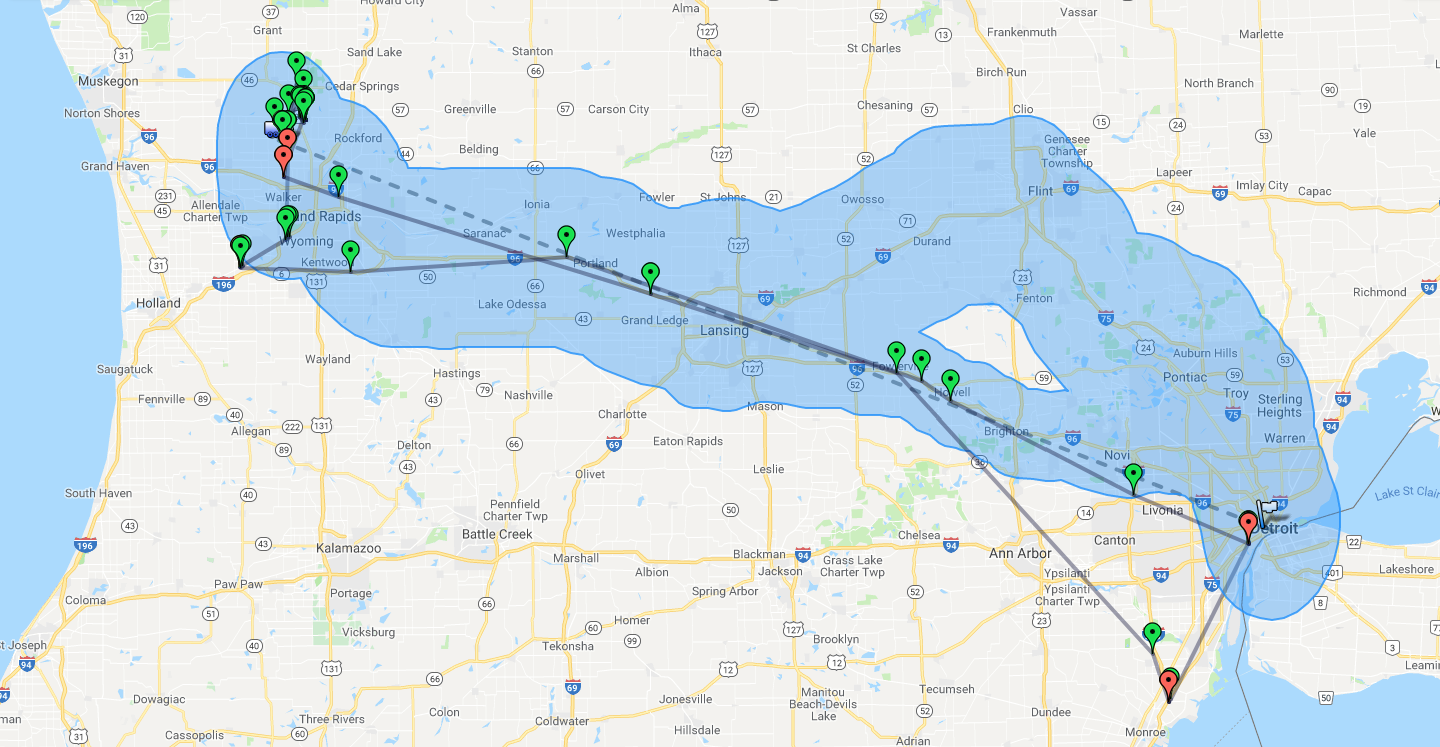
Our first pilot with an apple producer in Michigan. The blue bubble represents acceptable route deviation. This driver went a bit afield at the end.
My role
As Director of Experience, my job is to deeply understand the complex food supply chain landscape, identity market opportunities and competitive advantages for Transparent Path, and present to the C-team. These briefs help guide company strategy. I also perform competitive research, write editorials, manage PR and social communications, and identify opportunities for strategic storytelling.
The core of my work is managing the experience design of the risk mitigation platform for client partners, a dashboard and alert system which gives prescriptive guidance during disruptions and identifies future risk prediction. I also consult with sales and product support on how to onboard and support customers, and how best to achieve partner compliance with our sensor technology to assure uninterrupted IoT data.
I have managed and mentored five General Assembly User Experience cohorts who have done much of the work on user interviews, card sorting, journey mapping, and wireframing.
Working with the Director of Development, we have built an interim dashboard that will be used in our upcoming pilot, scheduled for an initial round of user testing in early 2021.
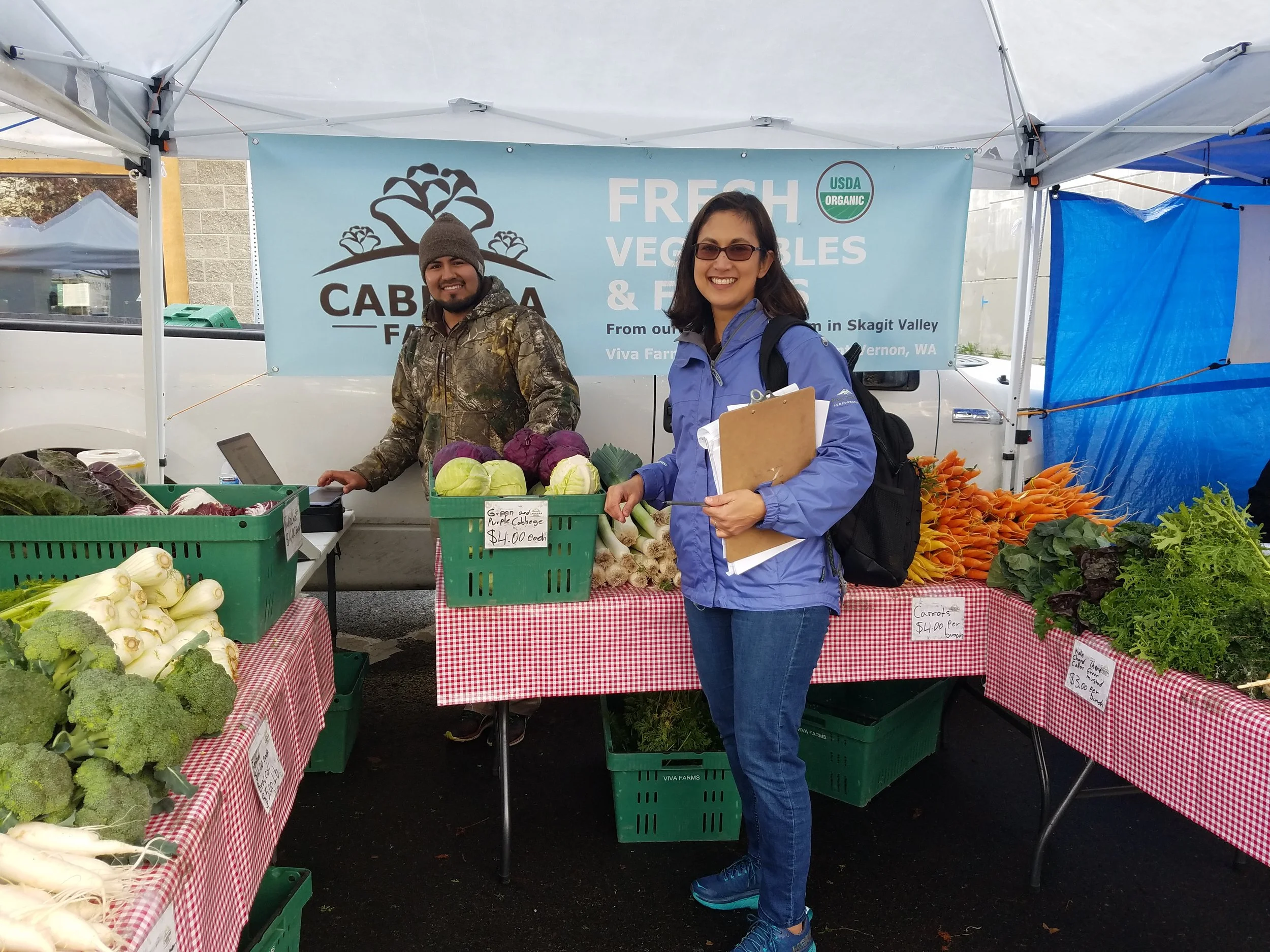
Interviewing food producers at local farmer’s markets
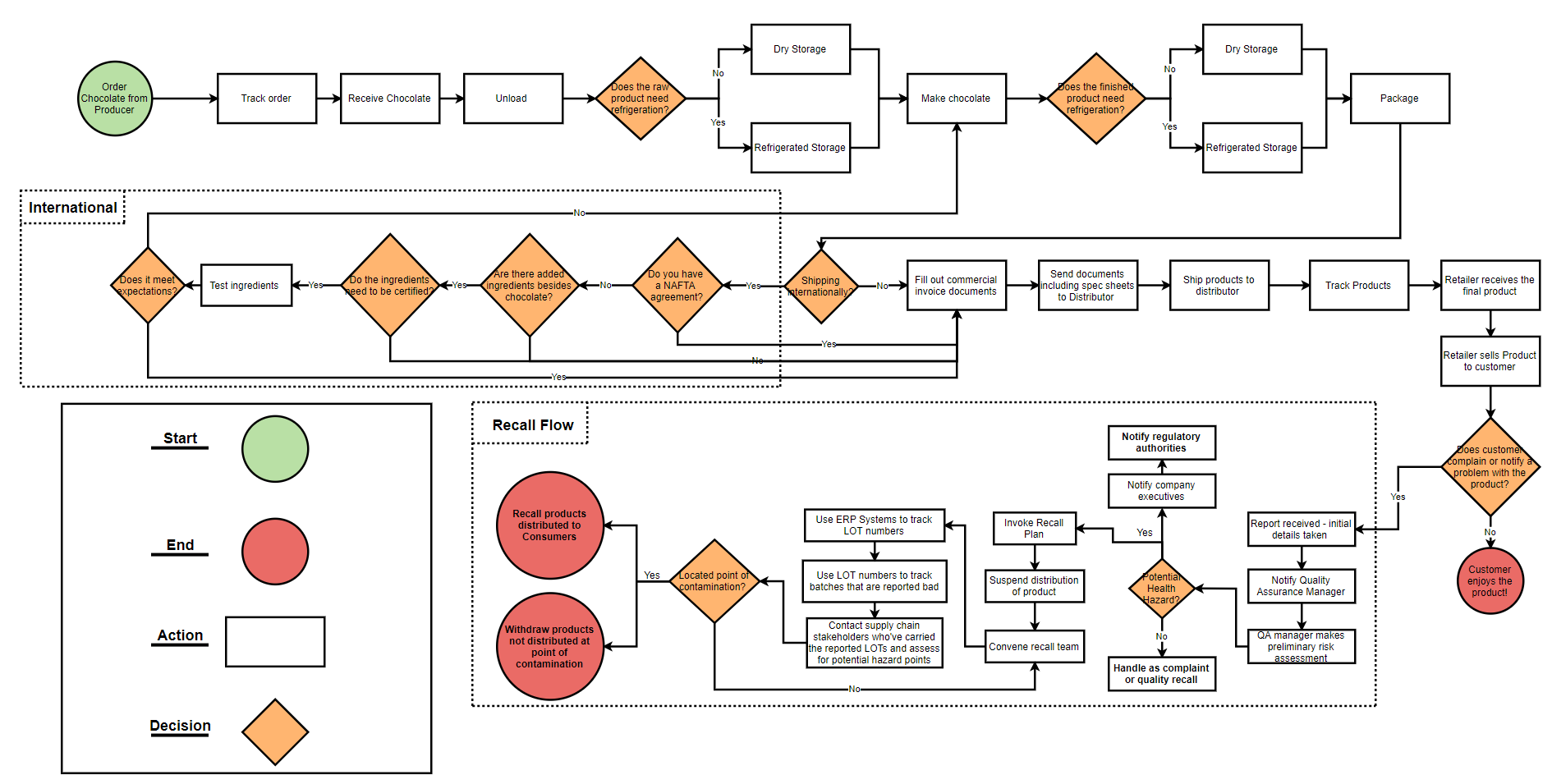
User flow for the chocolate supply chain from the fourth General Assembly cohort
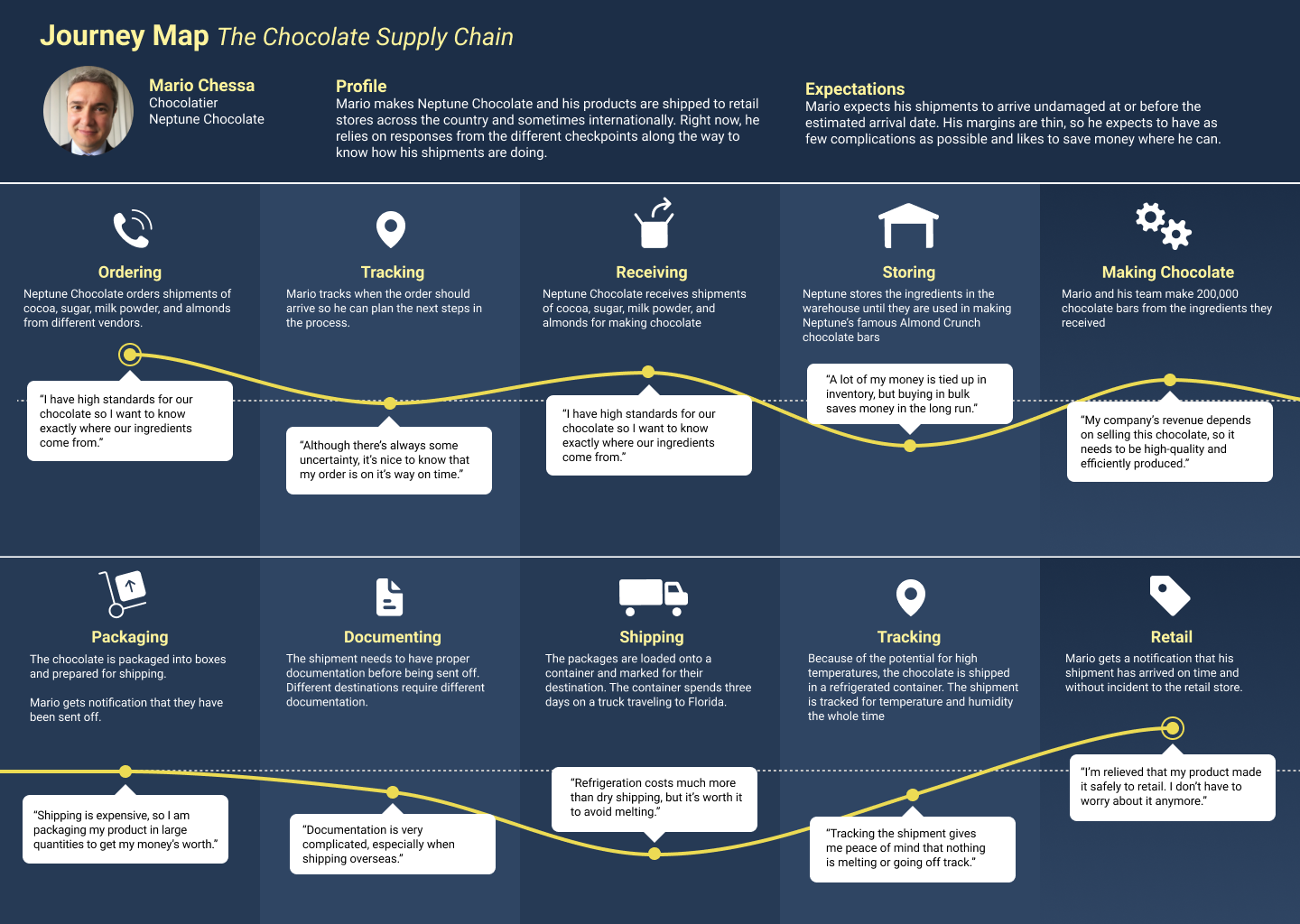
Journey map for the chocolate supply chain from the fourth General Assembly cohort
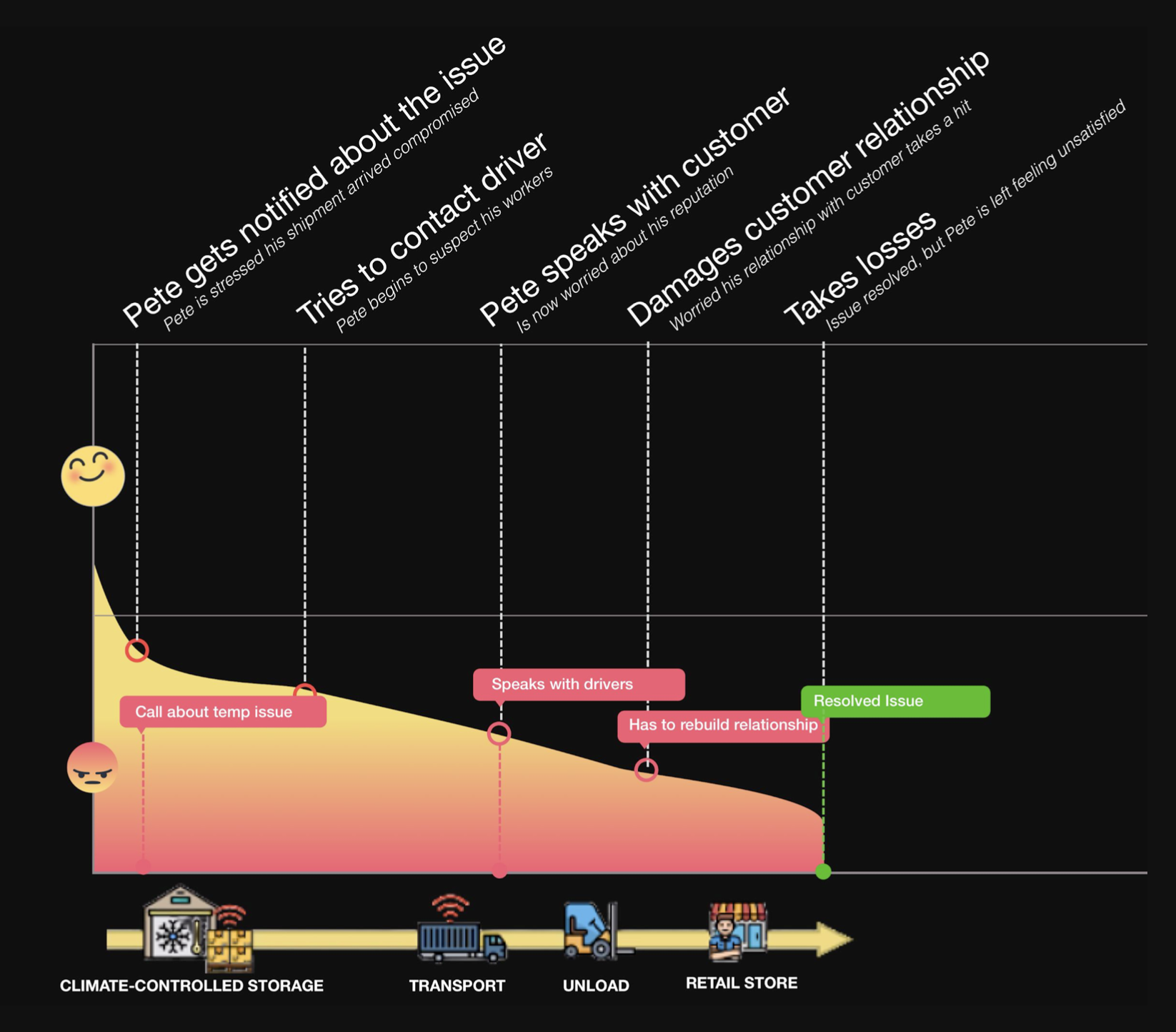
Journey map for alerts from the fifth General Assembly cohort
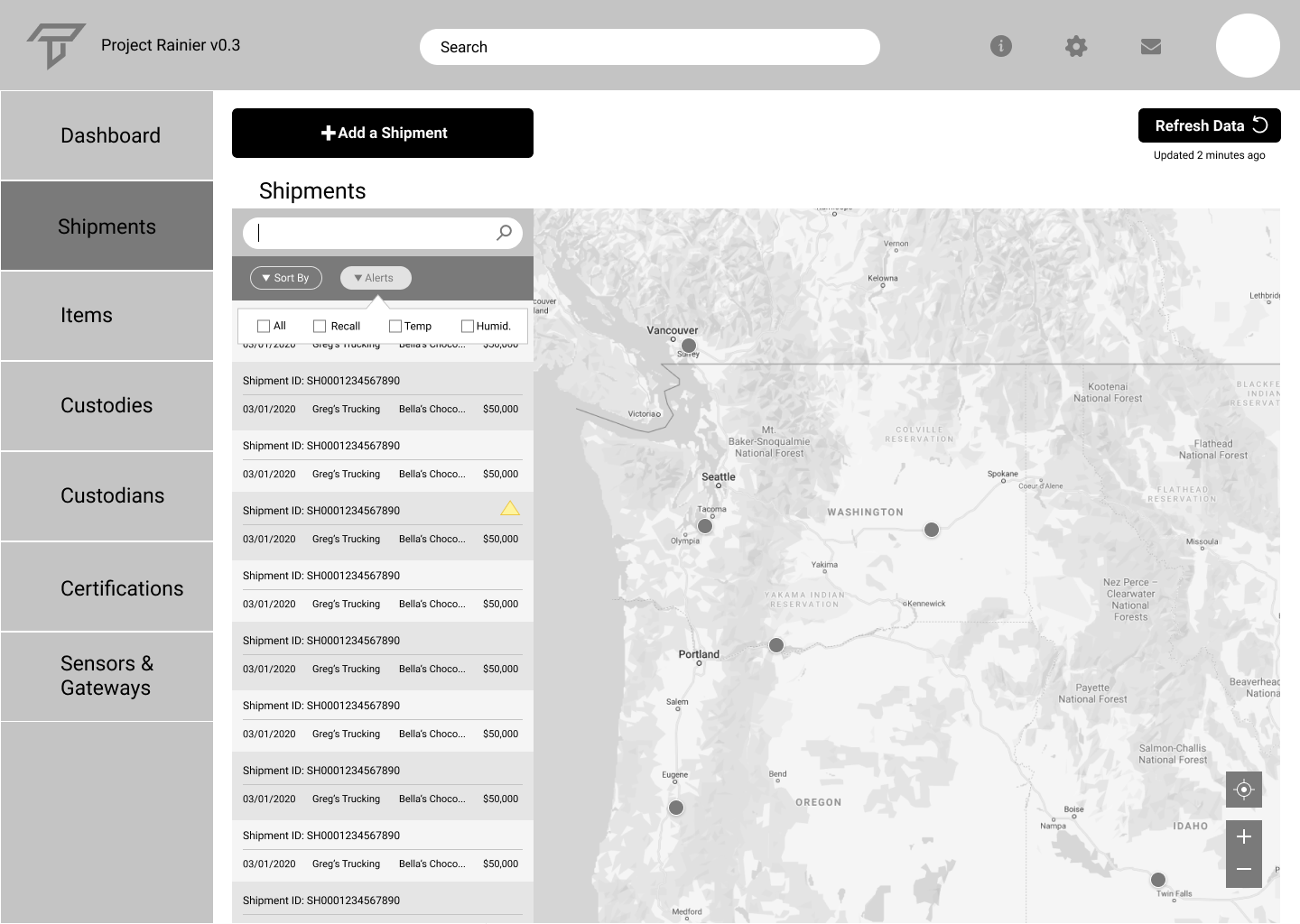
Wireframes for the risk mitigation platform dashboard from the third General Assembly cohort
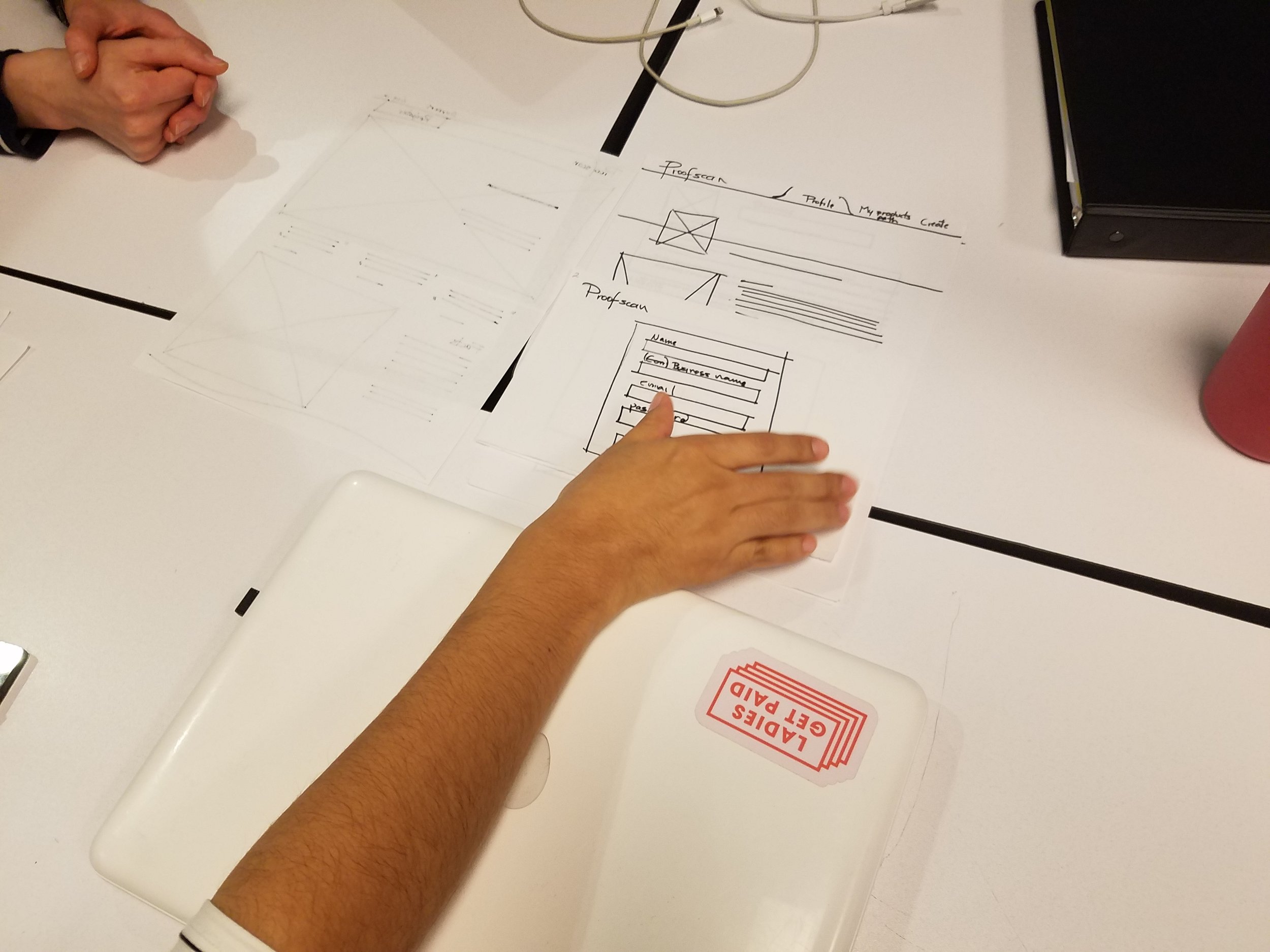
Paper prototype user testing
Additional design artifacts
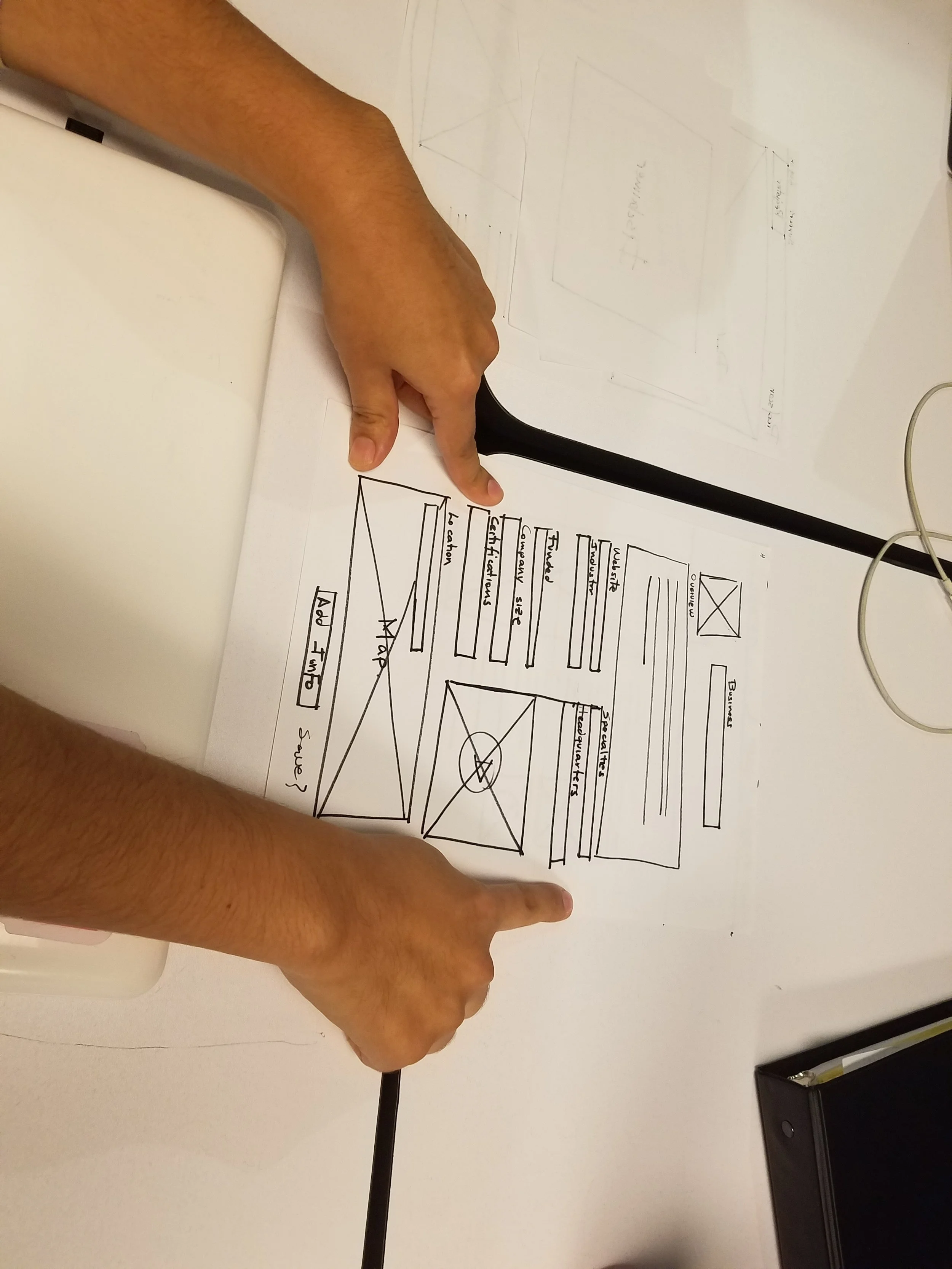
Paper prototype user testing
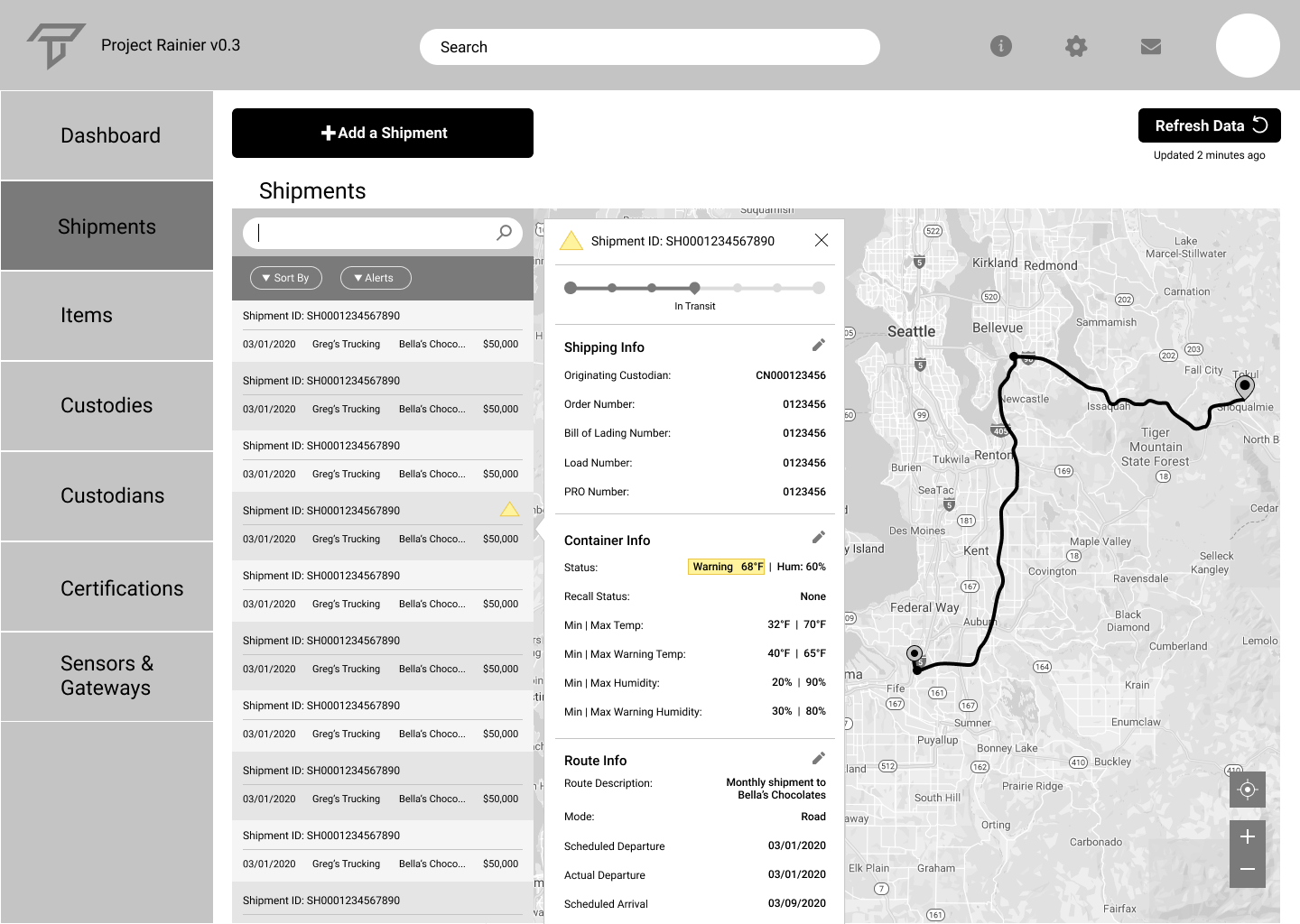
Wireframes for real-time tracking on the platform dashboard from the third General Assembly cohort
Processes and tools I use
Formative research, competitive research, stakeholder interviews, in-depth user interviews, contextual interviews, surveys, personas, card sorting, usability testing, Sketch wireframes, and Figma low fidelity prototypes